Author Archives: Rosanne Osborne

Unknown's avatar

About Rosanne Osborne

I am a college professor of English, poet, and a pastor of a local church.

Headshot

Headshot is the story of the eight best teenage girl boxers in the United States, told over the two days of a championship tournament in Nevada and structured as a series of face-offs. As the girls’ pasts and futures collide, the specific joy and violence of the sport comes to life with electric energy, and a portrait emerges of the desire, envy, perfectionism, madness and sheer physical pleasure that motivates each of these young women to fight.

This is a novel about the radicalness and strangeness of being physically intimate with another human when you are measuring your own body, through competition, against theirs. What does the intimacy of a physical competition feel like? What does it mean to walk through life in the bodies we’ve been given, and what does it mean to use those bodies with abandon?

Headshot was longlisted for the Booker Prize 2024.
This is a novel about the radicalness and strangeness of being physically intimate with another human when you are measuring your own body, through competition, against theirs. What does the intimacy of a physical competition feel like? What does it mean to walk through life in the bodies we’ve been given, and what does it mean to use those bodies with abandon?

Headshot was longlisted for the Booker Prize 2024.

Booker Longlist 2024

  • Colin Barrett, Wild Houses
  • Rita BullwinkelHeadshot    
  • Percival EverettJames      
  • Samantha HarveyOrbital       
  • Rachel Kushner, Creation Lake
  • Hisham MatarMy Friends             
  • Claire MessudThis Strange Eventful History               
  • Anne Michaels, Held
  • Tommy OrangeWandering Stars                    
  • Sarah PerryEnlightenment             
  • Richard Powers, Playground
  • Yael van der Wouden, The Safekeep
  • Charlotte Wood, Stone Yard Devotional

Tapestry of Counterpoint


At times tenacious, other times genteel–notably sardonic and clever, sobering and keen–Rosanne Osborne’s poems explore spiritual terrains via the objects, artifacts, and the natural landscapes of the physical world. Though faithful, Osborne is not a poet to rest in the ease of inherited beliefs, nor is she satisfied by an easy answer; though earthy, she is not a poet easily enticed into rote carnality, nor is she lured into the minutiae of corporeality. Balanced and clear, her poems sing with genuine simplicity–they hum with a robust intelligence and a spiritual grace as she names our ephemeral wholeness.
–Dave Harrity, author of These Intricacies

When a snake appears in Tapestry of Counterpoint, it does so not as an emblem of evil, but whether as warning or Death’s emissary or a second self is not clear. This suggests that Rosanne Osborne is no ordinary pastor; indeed, she’s also a retired English professor and poet in the aftermath of Katrina, standing before “the mystery of being.” Raised in rural Missouri, the poems’ speaker has left for college in New Orleans during the sixties; a “fundamentalist zealot / from the heartland,” she discovers “the freedom of doubt” while reading Paul Tillich. Now an aging woman, she is jolted physically while shoveling dirt to cover bulbs, an experience not unlike the one she experienced as a twelve-year-old bracing a ewe to help her mother with a breach birth, both incarnations of a sort. You’ll find here not only a mind exerting a counter pull to the forces of gravity and also the earthy and sensual delight in figs and pomegranates, the mouth pleasure in saying “havarti” in anticipation of the first bite of a roast beef sub. Precisely because Tapestry of Counterpoint is shadowed by death and moments of doubt, reading it, I can’t help but think of James Wright’s “brilliant blue jay” that jumps up and down on a branch because it knows “that the branch will not break.” Such faith is necessary to provide a “true account” of a long-life restlessness, an openness to change and uncertainty. Rosanne Osborne has brought to the page her whole self–body, mind, and spirit–to voice these earnest, wry, and wise poems.
–Debra Kang Dean, author of Totem: America
 
Rosanne Osborne’s first poetry collection, Tapestry of Counterpoint, deftly weaves together the experiences of her fascinating life. These poems reflect her personal and philosophical journey, enriched by the literary influences and poignant lessons gleaned from her tenure as both an English professor and Methodist pastor.
 
I particularly loved reading poems that capture scenes from a Missouri childhood that were so vivid that I felt myself pulled back in time. When colts and lambs are born, or hunted raccoons tremble in trees, the inseparable alchemy of hope and despair occurs. Yet, unlike her parishioners who gather at a funeral, nervously avoiding the deceased in the coffin, she does not flinch nor look away from death. When the poet experiences Zugunruhe, her own nocturnal restlessness, she retraces the paths she has chosen.
 
There are poems of intense personal scrutiny, while others celebrate simple joys, such as Havarti cheese or the tart crunch of pomegranate seeds. The reflections in this exquisite collection bring us to “remain at daybreak / to pile its stones.” proclaiming all the ordinary moments that allow us to recognize the holy ground over which we too travel.
–bg Thurston, author of The Many Lives of Cathouse Farm – Tales of a Rural Brothel


Finishing Line Press, P. O. Box 1626, Georgetown, KY  40324

Also available from Amazon.

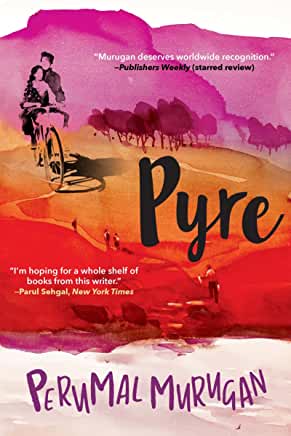
Pyre by Perumal Murngan

Check the official website of the Booker International Prize 2023 for background information on Muugan’s novel.

Wikipedia – Biography

Chicago Review of Books – Review

Times Literary Supplement – Review

Goodreads – Reviews

Washington Independent Review of Books

Tribune India – Review

New Yorker – Profile

Federal – Interview

Aniruddhan Vasudevan – Translator

The birth of a child is often figured as an emblem of regeneration, a symbol of growth that promises healing to the arid dryness of the land. Yet, in Pyre, the expected birth of a child to Kumaresan and Saroja promises only discord and death, a frightening result of crossing the barriers of caste. Kumaresan in Pyre and Samsa in Boulder are equally naive in believing that a child can somehow soften the caste-hardened village system of his own heritage or the rock-hardened personality structure of her partner.

Both of these novels gain their narrative power from the poetic instincts of their authors. In Boulder, the bold use of metaphor as the genesis of character grounds the protagonist to her environment and causes the antagonist to be realized in contrasted relief such as the image of Samsa’s group of mothers gathered to nurse their young. The ambiguous ending of Pyre, its fire-dream embracing the freezing Saroja, leaves the reader with the repetitive sound of Kumaresan’s bicycle. Poetry rather than plot-based denouement.

Boulder by Eva Baltasar

Check the official website of the Booker International Prize 2023 for background information on Baltasar’s novel. To read interviews with longlist writers, check here.

New York Times Review

Gooodreads

Times Literary Supplement

Wikipedia – Biography

Lattin Magazine – Interview

Guardian Review of Permafrost

Barcelona Metropolis – Profile

Boulder reveals herself in a novel in a way that she would never reveal herself in life. In life, she is a boulder, a rock that resists any penetration of the world beyond self. In Eva Baltasar’s novel, however, she reveals herself as the constant victim of the physical world. She is as fragile as the uncooked meat she cuts for the cooking pot. A first-person narrator, this protagonist freely chronicles her responses to the physical world as it attempts to mold her, to restrict her freedom. The artistry of the novel lies in the ability of the writer to depict this duality, to realize the inner and the outer character at the same time for the reader.

Boulder’s life with Samsa is a contrast in character. Boulder and Samsa are E. M. Forster’s two types of characters outlined in his classic Aspects of the Novel. Boulder is the flat character that shows very little change throughout the novel. Samsa, on the other hand, is Forster’s round character, whose complicated changes are foil to Boulder. The tension of the novel is realized as Boulder’s stasis is challenged by Samsa dynamic desire for her own child. This obsession characterizes her complicated personality and confounds Boulder wish for all things to remain the same.

The Booker International Prize — 2023

The longlist was released March 14. The shortlist will be released April 18, and final selection will be announced on May 23. I’ve ordered all of the books and read one, Looks like I’ll be reading a book every five or six days if I want to have them all read by the final celebration. The real challenge will be posting comments.

To preview this baker’s dozen, check out the Booker website.

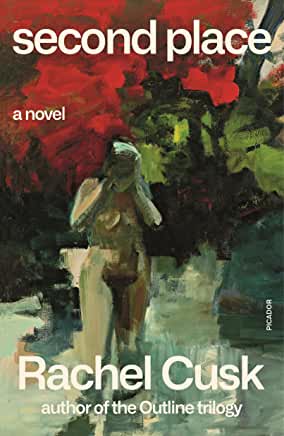
Rachel Cusk – Second Place

We all need a Jeffers in our lives, a person for whom we can write our stories. We all desperately want to be heard by someone. To be heard gives our story legitimacy, a palpable reality. The reader of Cusk’s novel may be more intrigued by Jeffers than any of the six characters who populate the novel. The chosen rhetorical convention suggests Robinson Jeffers, the faithful correspondent in Mabel Dodge Luhan’s epistolary treatment of D. H. Lawrence, but Cusk is doing more than simply celebrating Luhan’s life and writing. .

Guardian Review #1

Guardian Review

NPR Review

NYTimes Review

Washington Post Review

LA Times Review

Biography – Wikipedia

New Yorker Profile

Paris Review Intervie

Cusk is using a slice of the 30’s modernist literary scene to filter her study of the Covid-laced world of 2021. The voice in her novel writes to a nonjudgmental listener who gives her perfect isolation. The anonymous reader is utter plasticity. It shapes and reshapes the experience lurking under a life laboring with the perceived judgment of a pandemic. None of this is spelled out as the novel works as extended metaphor. Jeffers is one clue, and the title is another.

Probing the Artificial

Ishiguro’s novel probes the ethical issues inherent in artificial intelligence. There is a certain audacity that is unleashed when man presumes the god-like power of creating the mental facility for thought and feeling. The brain, the heart, the soul–these inner resources have always been thought to be the sacred ground at the core of humanity, but that threshold has been breached. Is it possible to engineer love?

Klara, in contrast to the human characters in the novel she narrates, demonstrates the capacity to respond to the Sun on a level that differs markedly. She alone has the capacity for both ontological and theological perception. She alone understands that the Sun is the ground of all being for her. He is the source of her power, and she sees in him the power to arbitrate the distance between life and death.

Her growth in devotion is one of the charming parts of the novel. From personal perception of life source, she moves to the conclusion that he restores life to the Beggar Man and his dog. This understanding, then, becomes the basis for her eventual appeal to the Sun to restore health to Josie. Like the classic devotees of antiquity, she makes her pilgrimage to the Sun’s holy place, Mr. McBain’s barn. Her own spiritual enlightenment is characterized by self-renunciation and a clarified sense of love. She willingly gives up a part of her own P-E-G Nine solution to disable the Cootings Machine in what she believes to be the will of the Sun. Despite the near-death struggle of Josie, her complete faith in the Sun engenders hope in the certainty of healing.

Ishiguro suggests that the ideal can be programed even though it cannot be lived by a faltering human community. In fact, that community does not recognize the worth of the artificial, cannot value its understanding of humility. It cannot live in perfection or understand perfection.

Anticipating Booker 2021

All of the pundits seem to believe that Kazuko Ishiguro’s Klara and the Sun will undoubtedly be named to the longlist to be announced on July 29. Certainly four previous Booker nominations and the 1989 prize for The Remains of the Day would add credence to that guess.

Biography

Profile

Paris Review Interview

Gardian Interview

Nobel Prize Lecture

New York Times Review

Guardian Review

Guardian Commentary

NPR Review

The Atlantic Review

Reading Part 1 of the novel, asks the reader to reimagine the role of the imaginary friend in the life of a child. Rather than the fruit of an over-active imagination, the possible friend becomes a commodity that can be purchased from a store, a selection that basically reduces the child to buyer, the friend to abstraction. This has the interesting effect within the authorial choices that Ishiguro makes of reducing the human to automation while exploring the accessibility of feeling within the commercial object. Narrated from the point of view of the AF who would choose her own buyer if she could, the story reveals an awakening to space and time that exceeds a buyer’s limitation. Klara, a mutant in her own right, delights in her days in the shop window, days that enlarge her vision. Longing for the dictates of her senses to be realized, she somehow knows that her hope exists in being chosen.

Klara’s focus on the Beggar Man and his dog becomes the vehicle for a dawning understanding of the nature of life and death, a deepening realization of the power of the Sun that transcends mere functional energy. That Ishiguro holds the identity behind the initialism AF until the end of Part 1 and the completion of the saga of selection is both rhetorical and symbolic. It is rhetorical in that it mimics the mystery of identity in the reader’s mind, and it is symbolic in the sense that the birth of a friend, albeit artificial, comes only in the ritual of choice.